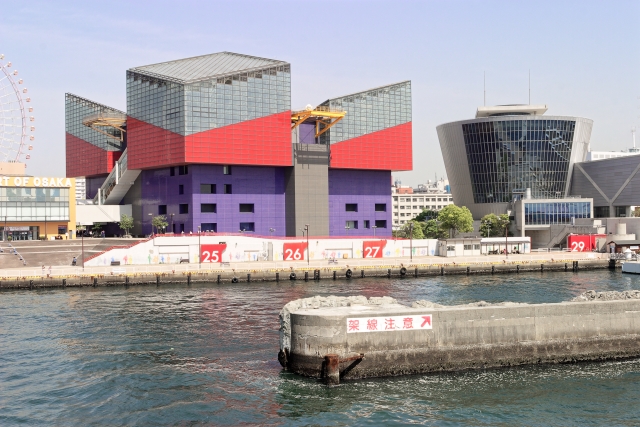
Kaiyukan — the aquarium sitting on Osaka Bay in the Tempozan district — is one of the largest in the world and consistently ranks among Japan’s most visited.
It’s worth the short trip from the city center.
A Closer Look at Kaiyukan
Kaiyukan opened in 1990 and has drawn tens of millions of visitors in the decades since.
The building itself is striking from the outside — three color schemes on the exterior represent the union of earth, water, and fire.
Designed Around the Pacific Rim
The aquarium is built around the concept of the Pacific Ring of Fire, the belt of volcanic and tectonic activity that encircles the Pacific Ocean.
Rather than grouping animals by species, Kaiyukan organizes its exhibits by geographic region — each major tank represents a specific place along the Pacific Rim.
You start at the 8th floor and gradually spiral downward through ecosystems ranging from the Japanese Forest and Aleutian Islands to Ecuador and Antarctica, with the central Pacific Ocean tank running through multiple floors as the constant backdrop.
The aquarium is divided into large exhibit zones, each modeled on a real region of the Pacific.
These are the ones most visitors remember:
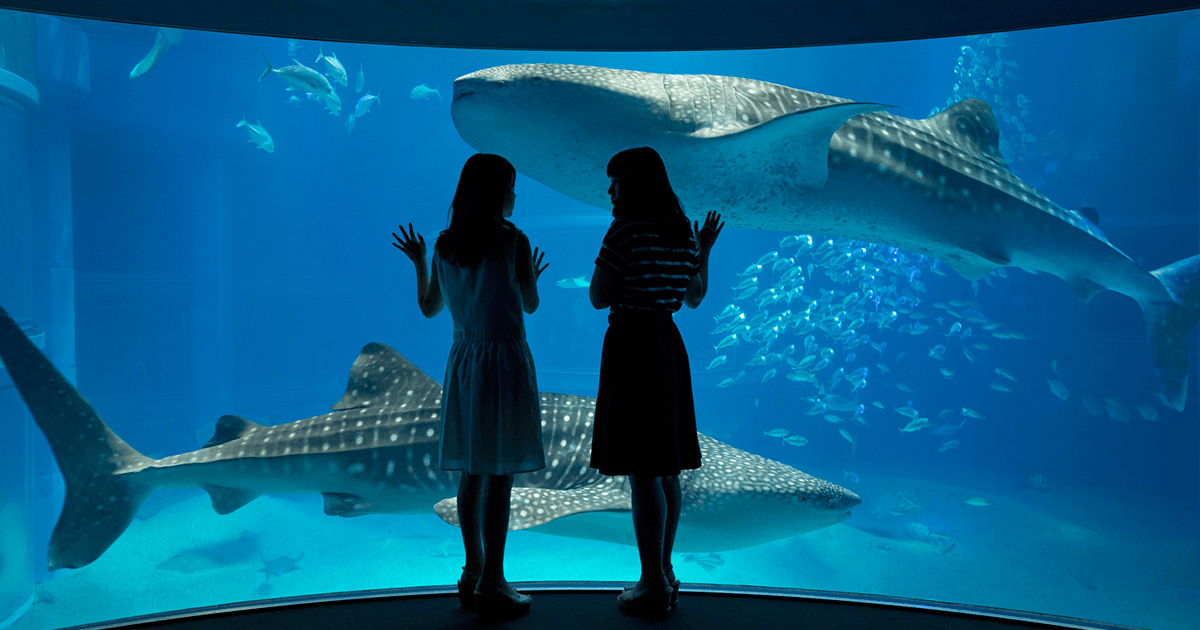
- The Pacific Ocean tank: The centerpiece of the whole aquarium. At nine meters deep and holding 5,400 tons of water, it’s home to whale sharks.
- The Antarctica zone: This cold-climate exhibit recreates the southern polar environment, giving you a view of both the surface and the underwater section so you can watch the penguins swim as well as waddle around on land.
- The Japan Deep tank: A look at deep-sea life from Japanese waters, featuring Japanese spider crabs and giant isopods.
Interactive Experiences
Kaiyukan isn’t a passive walk-through. Several parts of the aquarium are designed for closer contact with the animals, and the experience changes depending on when you visit.
The Aqua Gate
The Aqua Gate is a walkthrough tunnel tank that puts you in the middle of a school of rays and fish.
Beyond the entrance tunnel, the Interactive Area has three separate zones: the Arctic Zone, where ringed seals are kept; the Falkland Islands Zone with southern rockhopper penguins; and the Maldives Zone, where you can touch stingrays and small reef sharks directly.
Feeding sessions run on a set schedule throughout the day for various animals — it’s worth checking the daily program board when you arrive, as times shift depending on the creatures and the season.
Shopping and Dining
There are two shops near the aquarium exit.
One carries goods developed in collaboration with the aquarium’s keepers — items you won’t find anywhere else — while the other has a broader mix of Kaiyukan merchandise, ocean-themed stationery, fossils, and minerals.
Both are worth a look on the way out, and current stock is listed on the official shop page.

Dining Options
There’s a café about halfway through the aquarium route where you can sit down for a meal or a drink while taking a break from the exhibits.
Near the exit, a separate counter serves ice cream and snacks.
What’s Nearby
The aquarium sits within Tempozan Harbor Village, and a few nearby spots make it easy to fill out the day if you have time left over.
- Tempozan Ferris Wheel: The large ferris wheel directly adjacent to the aquarium is one of Osaka Bay’s most recognizable landmarks. A ride takes around 15 minutes and gives you a clear view over the harbor and across the city.
- Tempozan Marketplace: The shopping complex next door has restaurants, souvenir shops, and LEGOLAND® Discovery Center Osaka — a good option if you have younger children in the group.
- Osaka Culturarium at Tempozan: An art and culture venue hosting rotating exhibitions alongside a 3D theater. Manageable as a short visit after the aquarium if you’re interested in Japanese art and contemporary exhibitions.
Plan Your Visit
Most visitors spend around two to three hours inside, though you can take longer if you want to catch multiple feeding sessions or linger at the larger tanks.
Here’s what to know before you go:
| Hours | Generally 10:00 AM – 8:00 PM (last admission 7:00 PM). Hours vary by day and season; check the official calendar before you visit. |
| Admission | Adults from ¥2,700 (dynamic pricing — varies by date) |
| Children | Ages 7–15 from ¥1,400; ages 3–6 from ¥700; under 3 free |
| Access | 5-min walk from Osakako Station (Osaka Metro Chuo Line) |
A few practical notes:
Book ahead. Advance e-tickets are available on the official website in English, Chinese, and Korean. On busy weekend days, walk-up entry may require a wait for a timed slot.
Osaka Kaiyu Ticket: This combined ticket covers aquarium admission plus one day of unlimited travel on Osaka Metro and city buses. Purchase it at any major station — not at the aquarium itself.
After 5:00 PM: The lighting and music shift to a quieter night-mode atmosphere. The aquarium tends to be less crowded in the evening, and the tanks look noticeably different under the darker lighting.
Weekday mornings are typically the quietest time to visit. Weekends and school holidays get busy, particularly around the main Pacific Ocean tank.
For current hours, ticket prices, and access details, refer to the official Kaiyukan website: kaiyukan.com/language/eng


comment