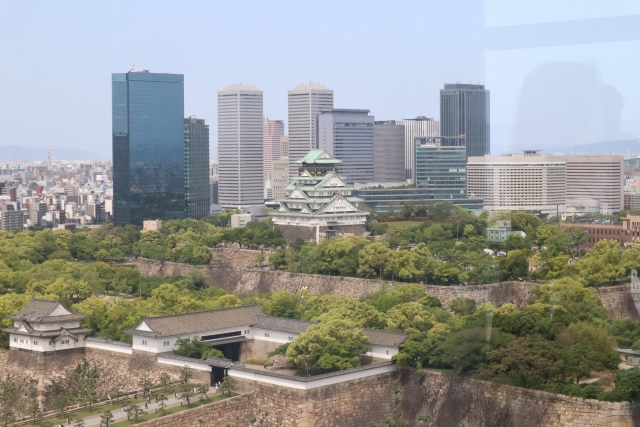
Osaka Castle sits at the heart of one of Japan’s most visited cities — and for good reason. Built in the 16th century by the warlord Toyotomi Hideyoshi, it has been destroyed, rebuilt, and restored over the centuries, yet it keeps drawing visitors who come for the history, the views, and the food.
| Tenshu Admission | ¥1,200 (adults) · ¥600 (high school & university students) · Free (junior high and under) |
| Hours | 9:00 AM – 5:00 PM · Last entry 4:30 PM · Extended hours in season |
| Closed | December 28 – January 1 |
| Park Entry | Free |
| Nearest Stations | Osaka-jo Koen — JR, 5 min · Tanimachi 4-chome — Subway, 8 min |
What to See at Osaka Castle
The castle grounds cover a wide area, and what you prioritize will depend on how much time you have. Here is a rundown of the main things worth your attention.
The Main Tower (Tenshu)
The tenshu rises eight stories above the inner moat and houses a museum covering the castle’s history and Hideyoshi’s life. Each floor has a different focus — from armor and weapons to painted folding screens and replicas of Hideyoshi’s golden tea room. The collection is well-presented, with English explanations throughout.
The top floor observation deck gives you a full view of Osaka in every direction. On a clear day you can see the Ikoma mountains to the east and, in the right conditions, all the way to Kyoto. Allow 45 minutes to an hour to go through the museum, longer if you stop to read the displays. The interior gets crowded on weekends and holidays, so arriving at opening time (9:00 AM) makes for a noticeably calmer visit.
Nishinomaru Garden
Located just west of the main tower, Nishinomaru Garden is home to more than 600 cherry trees and offers some of the clearest views of the tenshu from a distance. In late March and early April, when the blossoms are at their peak, the combination of pink canopies against the castle’s white and green exterior makes this spot particularly worth the ¥300 admission. Outside of cherry blossom season it is a quiet, well-maintained garden — a good place to sit down after climbing the tenshu.
Free entry for junior high school students and under, Osaka residents aged 65 and over (ID required), and holders of a disability certificate.
Architectural Details Worth Noticing
Several details on and around the castle are easy to walk past without a second look. The gold shachihoko (tiger fish ornaments) on the roof ridges were originally meant to protect the building from fire through symbolic means — they are now one of the castle’s most photographed features. The stone walls, built using a technique called nozurazumi that stacks irregular stones without mortar, have stood for centuries despite repeated earthquakes.
Near the Sakuramon Gate, look for the tako-ishi (octopus stone): a single boulder measuring roughly 5.5 meters wide and 3.5 meters tall. It is one of the largest stones used in the castle’s construction and was transported from Aji in Kagawa Prefecture, a journey of well over 100 kilometers.
Hidden Corners of the Castle Grounds
The castle complex originally functioned as a military stronghold, and traces of that remain across the grounds. The outer moat, parts of which date to Hideyoshi’s era, still surrounds the site, and sections of the stone walls conceal passages and chambers once used to store weapons and shelter troops during sieges.
On the northern grounds, there is a time capsule buried in 1970 during Expo ’70, the world’s fair held in Osaka that year. It contains more than 2,000 objects meant to represent human life and culture at the time, and it is not scheduled to be opened until the year 6970.
Food in and Around Osaka Castle Park
The park covers more than two square kilometers, and there is a reasonable amount to eat both within the grounds and a short walk beyond. Osaka has a well-earned reputation for street food, and you will find some of that right here.
Takoyaki and Osaka Street Food
Osaka is where takoyaki originated, and the park has food stalls selling them on most days, particularly on weekends. The standard version comes eight to a serving, filled with octopus and topped with bonito flakes, mayo, and a savory brown sauce — expect to pay around ¥500 to ¥600. Eating them fresh off the griddle is the right way to do it, though be aware they hold heat for longer than they look like they will.
Kushikatsu — skewered and deep-fried meat, seafood, and vegetables — is another Osaka staple you will find near the park. The local rule, enforced seriously at most spots: no double-dipping in the communal dipping sauce.
Matcha Sweets and Café Stops
Several stalls in the park sell matcha-flavored soft cream, mochi, and other Japanese sweets, which make for a solid break after the climb up the tenshu stairs. There are also a handful of café-style spots in the park where you can sit down for coffee or a light meal. The food options here are limited, but they are reasonably priced and the settings are relaxed.
Bringing Your Own Food
Picnicking in the park is common, especially among locals on weekends. Convenience stores — 7-Eleven, FamilyMart, and Lawson — are within a 10-minute walk of most gates and stock onigiri, sandwiches, salads, and drinks at low prices. The open lawns near the inner moat are a comfortable place to sit, and the park has no restrictions on outside food.
The Surrounding Neighborhood
For a proper sit-down meal, the neighborhoods toward Tanimachi 4-chome and Morinomiya have a wider range of options: ramen, udon, set-lunch teishoku restaurants, and a few spots serving Osaka-style okonomiyaki. Most are aimed at local workers and tend to be affordable.
Getting There
Osaka Castle is accessible by both subway and JR train. There is no dedicated parking at the castle, and driving is not recommended.
| Line | Station | Walk Time |
|---|---|---|
| JR Osaka Loop Line | Osaka-jo Koen | ~5 min (north entrance) |
| Subway Tanimachi / Chuo Line | Tanimachi 4-chome | ~8 min (Otemon Gate) |
| Subway Chuo / Nagahori Tsurumi-ryokuchi Line | Morinomiya | ~8 min (east entrance) |
| JR Osaka Loop Line | Morinomiya | ~6 min (east entrance) |
From Osaka Station (Umeda), the JR Osaka Loop Line to Osaka-jo Koen takes around 10 minutes. From Namba, the subway Chuo Line to Tanimachi 4-chome takes around 15 minutes.
The park has several entrances. Tanimachi 4-chome leads to the Otemon Gate, which is the main entrance and the most direct route to the tenshu. Osaka-jo Koen station brings you in from the north side.
Tips for Visiting
- When to go: Late March to early April for cherry blossoms in Nishinomaru Garden, and mid-November for autumn foliage in the park. Both seasons are crowded — weekday mornings are the easiest time to visit year-round.
- How long to budget: 2 to 3 hours covers the tenshu museum and a walk through the main grounds. Add another 30 to 45 minutes if you are visiting Nishinomaru Garden.
- What to wear: The route from any station to the tenshu involves a fair amount of walking on stone paths and staircases. Comfortable shoes matter more than you might expect.
- Photography: The tenshu looks best from the inner moat area. For cherry blossom shots with the castle as a backdrop, Nishinomaru Garden is the spot. Morning light before 10 AM is generally better than midday.
- Crowds: The tenshu elevator tends to have a line on busy days. Taking the stairs is faster during peak hours and gives you more time at each floor’s museum displays.
A Brief History of Osaka Castle
The castle has been destroyed and rebuilt three times over four centuries. If you want to get more out of your visit, it helps to know the outline of that story before you arrive.
Origins: Toyotomi Hideyoshi’s Vision
Osaka Castle was built in 1583 by Toyotomi Hideyoshi, a feudal lord who rose from humble origins to become one of Japan’s most powerful rulers. He chose an elevated plateau overlooking the surrounding plain — a strategic position that made the castle difficult to attack — and transformed it into a structure that was as much a political statement as a military fortification. The original tenshu was covered in gold leaf and lacquerwork, designed to project power as much as to repel enemies. Thousands of laborers were brought in from across Japan to assemble the massive stone walls, some using boulders weighing over 100 tons.
Sieges, Fire, and Rebuilding
Hideyoshi’s death in 1598 set off a power struggle that ended at Osaka Castle itself. The Tokugawa forces besieged and burned it during the Summer Siege of Osaka in 1615, bringing an end to the Toyotomi clan. The Tokugawa rebuilt it on a grander scale in the 1620s, only for lightning to strike the tenshu in 1665, burning it to the ground once more. It was not rebuilt for more than 260 years.
The current tenshu dates to 1931, funded largely by donations from Osaka citizens and built with reinforced concrete to withstand earthquakes. A major renovation in 1997 restored the exterior to its historical appearance, including the gold-leaf ornaments and green roof tiles, and updated the interior with modern museum facilities.
Frequently Asked Questions
Some quick answers to the questions that come up most often about visiting Osaka Castle.
Is Osaka Castle free to visit?
The surrounding park is free to enter. Admission to the tenshu (main tower museum) costs ¥1,200 for adults and ¥600 for high school and university students. Junior high school students and under enter free. The Nishinomaru Garden charges a separate ¥300 for adults (free for junior high school students and under, Osaka residents aged 65 and over with ID, and holders of a disability certificate).
How do I get to Osaka Castle from Osaka Station?
Take the JR Osaka Loop Line from Osaka Station to Osaka-jo Koen Station — about 10 minutes. The park entrance is a 5-minute walk from there.
How long should I plan to spend at Osaka Castle?
Most visitors spend around 2 to 3 hours in total. The tenshu museum takes 45 to 60 minutes depending on how much you read, and exploring the grounds adds another hour or so.
Can I visit Osaka Castle without paying?
Yes. The outer park, moat area, and castle grounds are all free to walk through. You only need to pay to enter the tenshu (¥1,200 for adults) or Nishinomaru Garden (¥300 for adults).
What is the best time of year to visit?
Cherry blossom season (late March to early April) and autumn foliage (mid-November) are the most scenic. For fewer crowds, aim for a weekday outside of these peak periods.
Is food available inside Osaka Castle Park?
Yes. The park has food stalls, small cafés, and a few restaurants. Takoyaki and matcha sweets are the most common options. Convenience stores are also within a 10-minute walk if you prefer to bring your own food.
Is Osaka Castle worth visiting?
For most visitors to Osaka, yes. The museum inside the tenshu is well put-together, the grounds are pleasant to walk through, and the castle is a genuine historical site rather than a purely reconstructed attraction. It pairs well with a visit to the Osaka Museum of History, which is a short walk from the Otemon Gate.
Reference: Osaka Castle Museum Official Website


comment